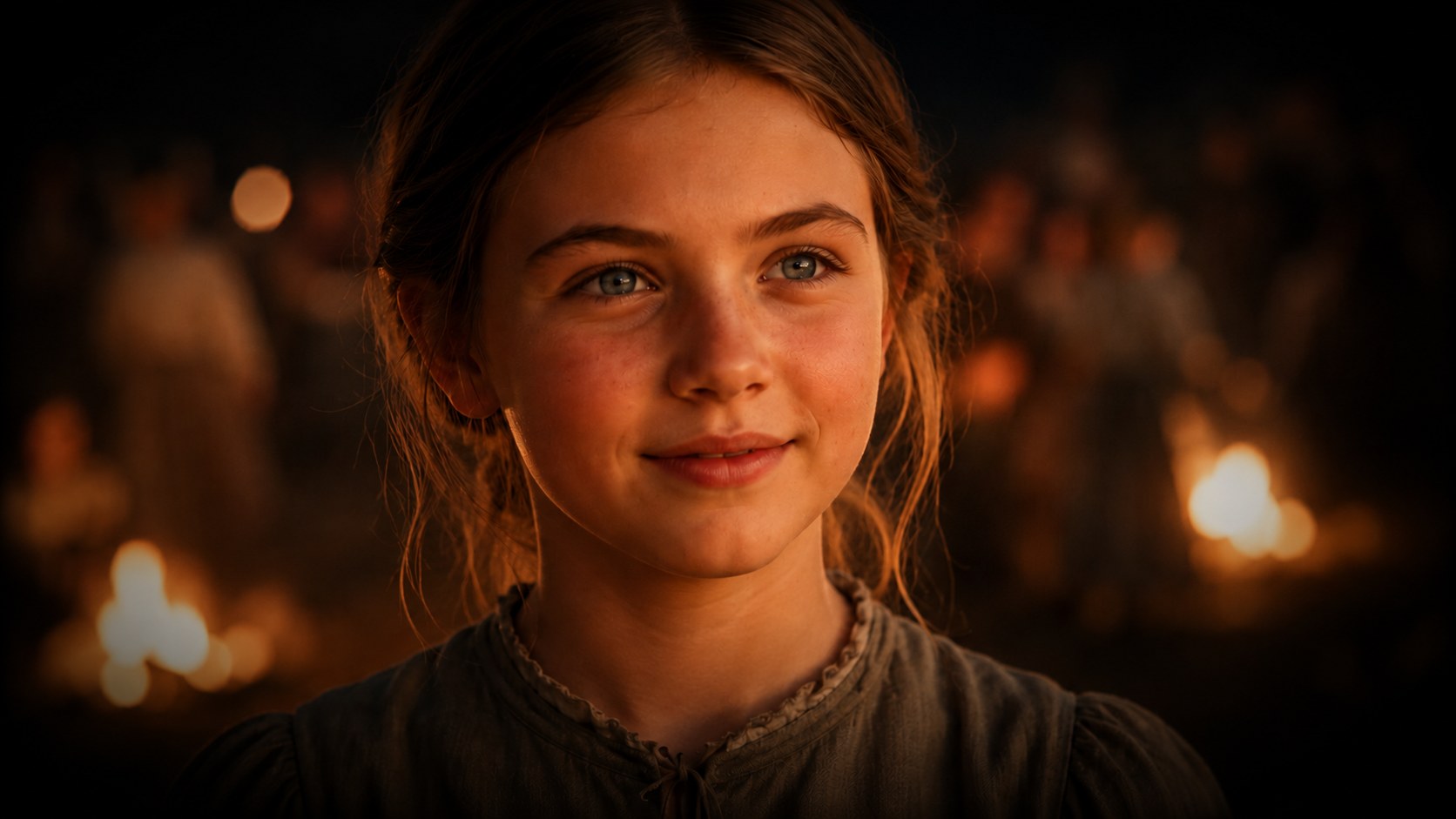

Emeline, a girl lit by firelight against the dark on the Oregon Trail.

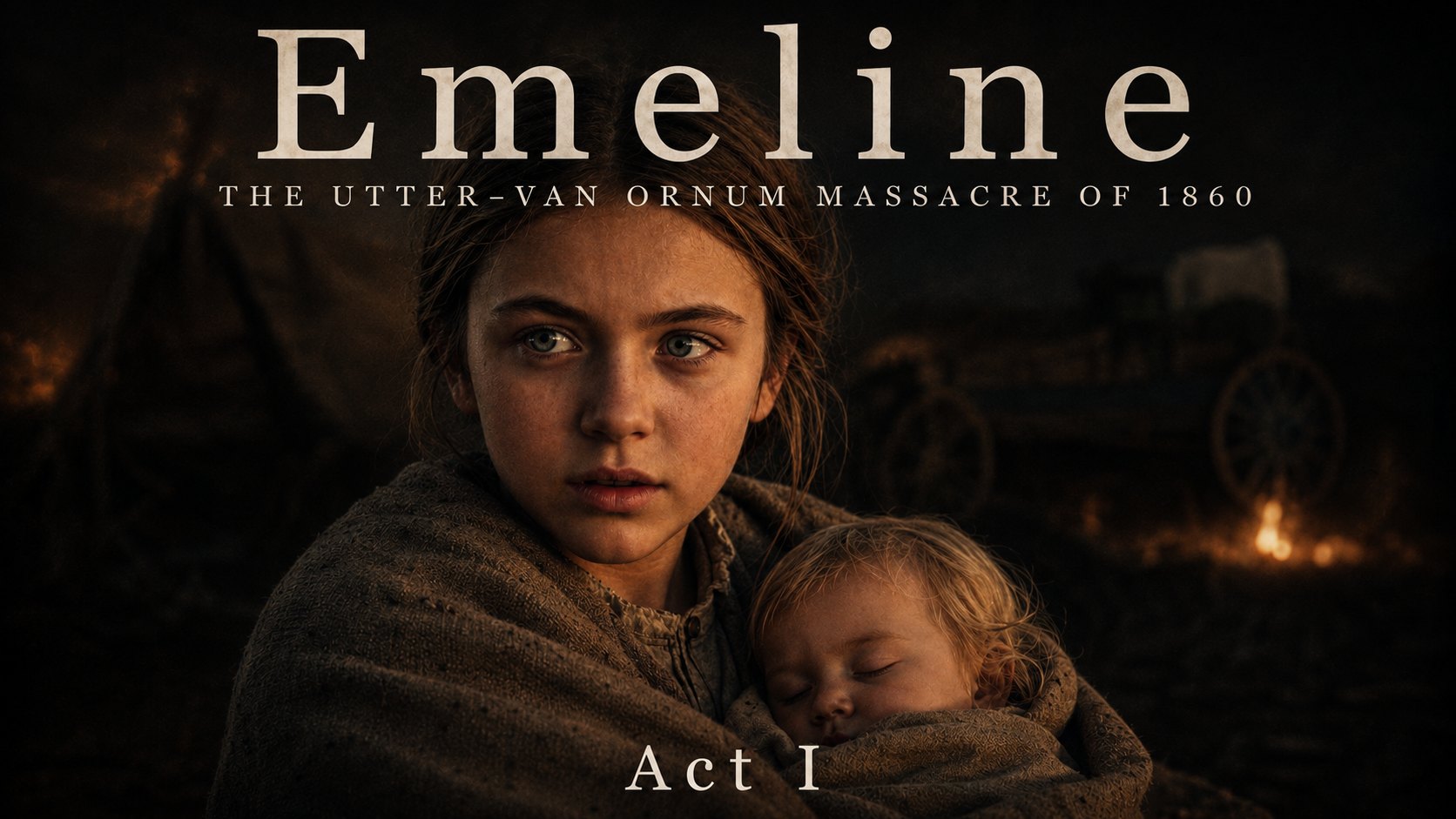
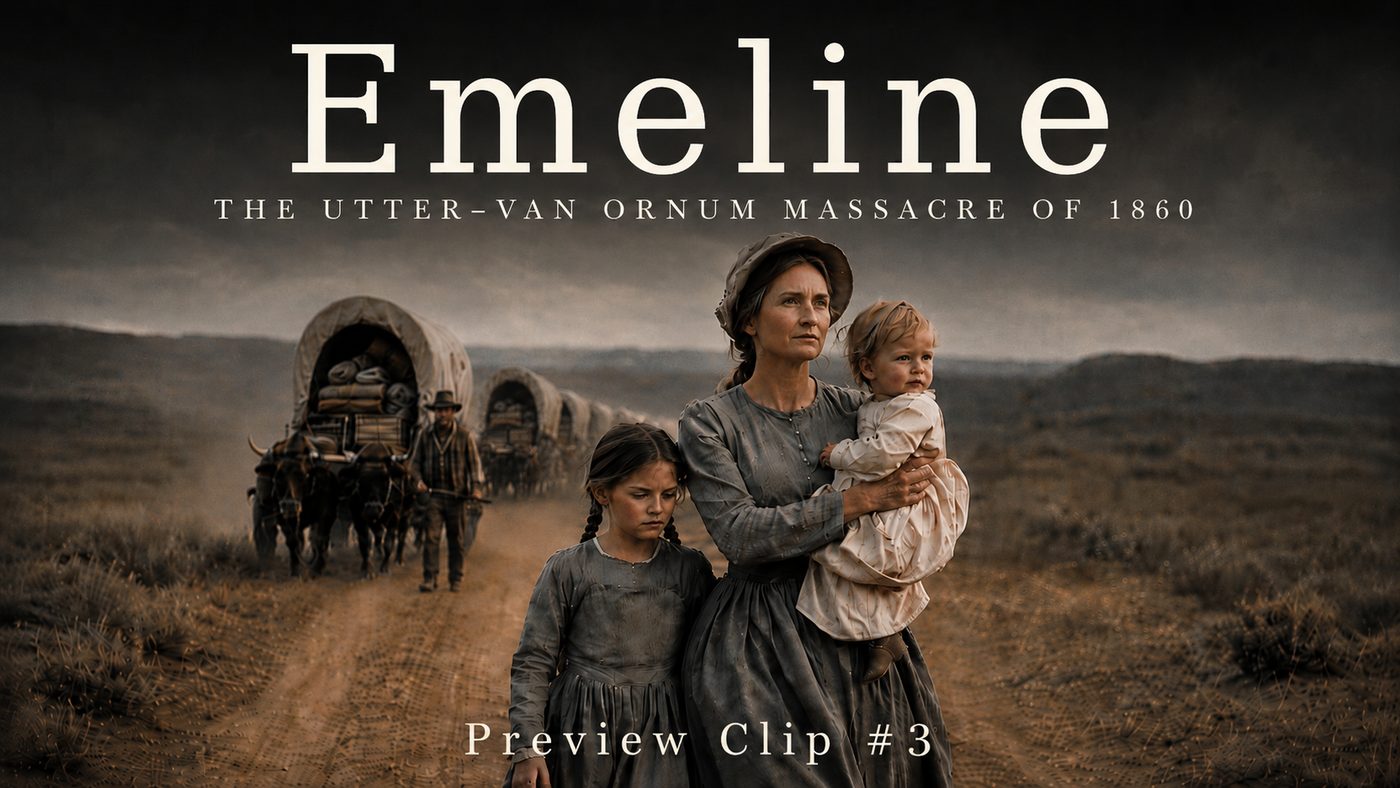
Emeline

The Utter-Van Ornum Massacre of 1860

Based on a true story of the Oregon Trail

Watch Act I

Act I of three — now streaming · Acts II & III in production

On the first day of May, 1860, a family of twelve set out for Oregon.
Their thirteen-year-old daughter was the only one to arrive.

The Film

A journey west, remembered by the girl who survived it.

In the spring of 1860, thirteen-year-old Emeline Trimble left Wisconsin with her family — twelve of them in all — to build a new home in Oregon. There was butter churning from the motion of the wagons, songs and swept-ground dances by firelight, and the felt certainty that in union was our strength.

Five months later, on the Snake River in what is now Idaho, their wagon train was attacked. What followed was six weeks of flight across the high desert — hunger, cold, and losses no one so young should have to carry. Emeline lived. Almost no one in her family did.

Emeline is a feature-length historical film drawn entirely from her own published account, told through the eyes of the girl who lived it — restoring a name, a face, and a voice to one of the Oregon Trail's forgotten catastrophes.

Now Streaming

Watch Act I

Watch Emeline, Act I
Act I Now streaming Watch on YouTube ↗
Act II In production
Act III In production

Original Music

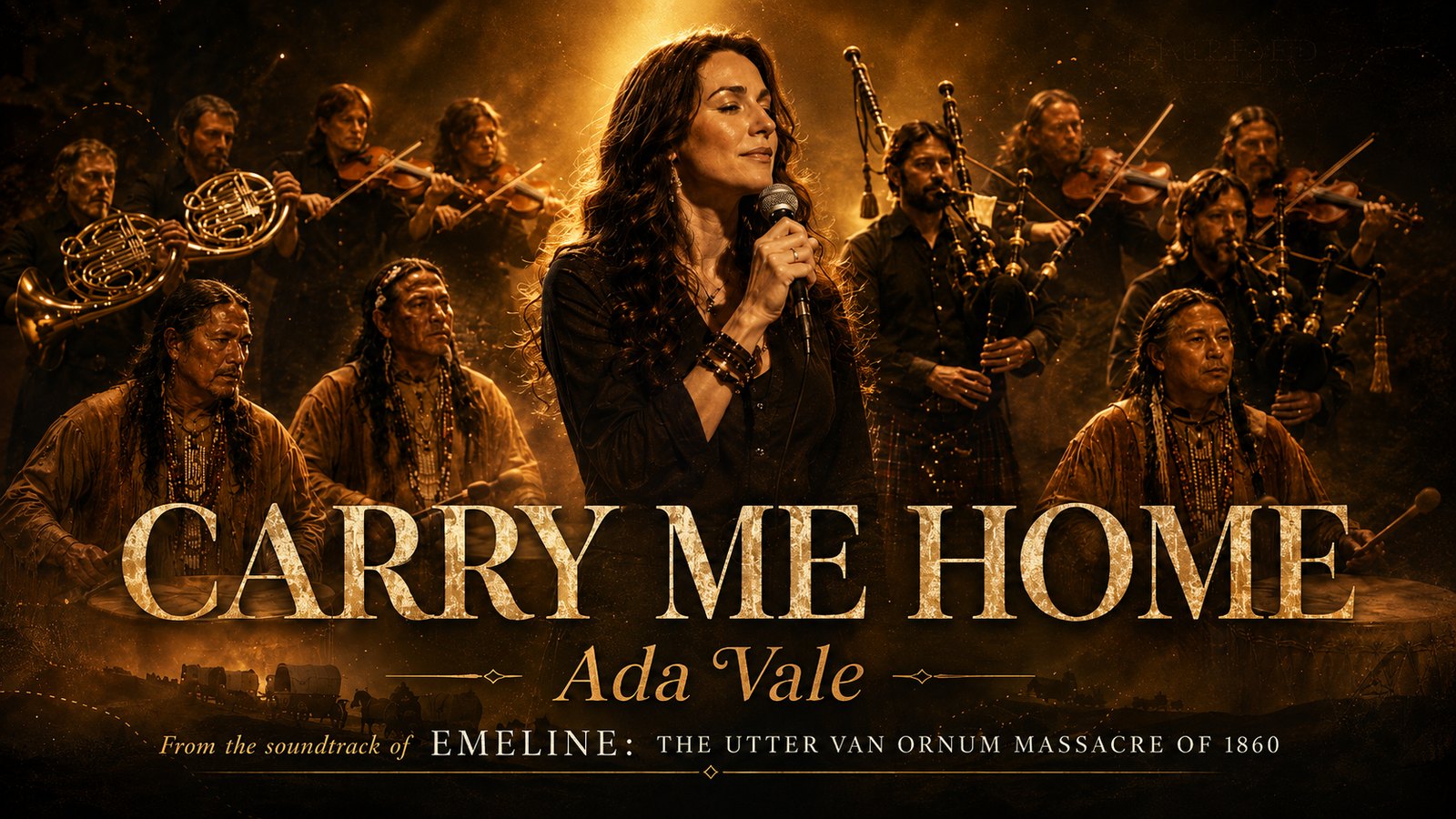
“Carry Me Home”

The theme song of Emeline — a lament for a family that set out west and did not arrive. Performed by Ada Vale, the film's virtual artist.

Carry Me Home — Ada Vale, from the soundtrack of Emeline

Theme song “Carry Me Home” performed by Ada Vale · Music & lyrics by Bill Masters
Ada Vale is a virtual artist created for this film — a studio persona, not a real performer.

More music from the film →

History

The true story

The Utter–Van Ornum Massacre was real. In September 1860, an emigrant wagon train of more than forty men, women, and children was attacked over several days near Castle Creek, along the Snake River in what is now southwestern Idaho — one of the deadliest emigrant disasters on the Oregon Trail. Of the family of twelve who set out with Emeline, she alone survived.

Emeline Trimble Fuller lived to tell it. Around 1885, from a quiet life in Wisconsin, she wrote her account as a letter to the Columbus Republican. It is from that letter — now in the public domain — that this film is drawn, faithful to what she saw, heard, and endured as a girl of thirteen.

What became of them

  • The Van Ornum parents were killed pressing on toward the Malheur country; four of their children were carried into captivity.
  • Reuben Van Ornum, a boy of about eight, was recovered by soldiers in 1862 — and years later chose to return to the Shoshone who had raised him.
  • Emeline's brother Christopher, eleven, gave himself to the Indians' camp to keep the others fed. He did not come back.
  • Emeline was carried to Fort Walla Walla by the soldiers who found her, and later to relatives in Oregon. She was thirteen.
In Her Own Words

Emeline tells it herself

The film keeps faith with a real voice. Every line below is Emeline's own, from her account Massacred By The Indians (c. 1885) — reproduced here from the public domain, exactly as a thirteen-year-old remembered it a quarter-century on.

“I shall never forget the tearful faces of my dear old grandparents as they stood at the end of the lane… with tears streaming down their wrinkled faces to bid a last adieu to their youngest child and her family.”

— the leaving, May 1860

“Will the reader of this narrative please pause a moment and reflect upon my situation. A child of barely thirteen years… taking a nursing babe of one year and four other children, all younger than herself, and fleeing for life… into the pathless wilderness.”

— the flight from the wagons

“I went over toward Snake River, about two miles, and I could see their camps, but could not see any living thing around them. I called ‘Christy,’ loud and long, but the echo of my own voice was all the answer I could hear.”

— searching for her brother

“In vain had I saved the choicest morsel of everything for her… For over forty days I had carried her, but had to give her up at last, and I was left alone.”

— her baby sister
Read Emeline's full account

Her complete letter, reproduced unaltered from the public domain. A primary historical document — it carries the language and prejudices of its era; reader discretion advised.

A frame from Emeline

The Production

Built by hand, frame by frame.

Emeline is an independent film — a solo, multi-year production that reaches for the scale of history with the tools of one filmmaker. Every shot is composed as a still image, brought to motion, scored, and cut into a narrated feature, image by image, from Emeline's own words.

It is a small labor set against a large story: a way to give a thirteen-year-old girl, and the people she lost, the picture the newspapers of 1860 never could.

A Bill Masters Production